Some plants carry a whole continent within them. Kratom – botanically Mitragyna speciosa – is just such a case: a tree from the humid lowlands of Southeast Asia whose name is heard ever more often in Europe today, but whose story reaches back centuries further, to the river villages of Thailand, Malaysia and the islands of Borneo. At SMOUKS we have a soft spot for plants with a pedigree, so we decided to put together a calm, factual portrait: what kratom actually is, where it comes from and why people talk about its colours. No sensation, just botany, history and culture.
What is kratom: a tree from the madder family
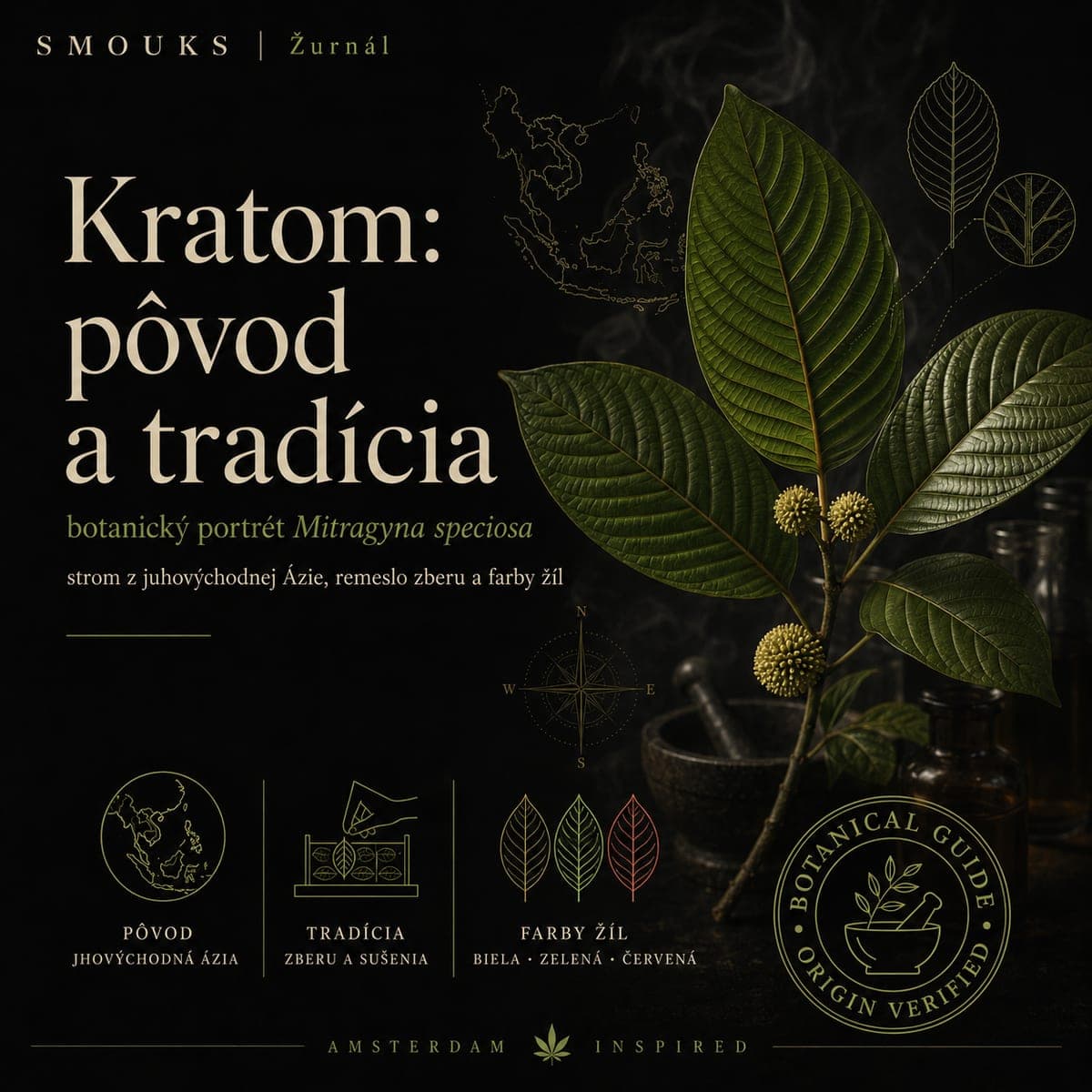
Mitragyna speciosa is an evergreen tropical tree of the madder family (Rubiaceae) – the same botanical family that includes the coffee plant. In ideal conditions it grows to more than fifteen metres tall, with glossy oval leaves, prominent veining and spherical yellowish flower heads. It is the leaf that has made the plant famous for centuries.
The word “kratom” comes from Thai and in everyday speech refers to both the tree and its leaf. In the technical literature you will come across the Latin name Mitragyna speciosa, given to the plant by the Dutch botanist Pieter Korthals in the 19th century – a small but pleasing link to the Amsterdam tradition we at SMOUKS claim as our own.
Origins in Southeast Asia
Kratom's homeland is the tropical belt of Southeast Asia – above all Thailand, Malaysia, Indonesia (especially the islands of Borneo and Sumatra), Myanmar and Papua New Guinea. The tree loves what few places can offer: a hot, humid climate, abundant rainfall and fertile, well-drained soils along rivers and in marshy lowlands.
Geography is not just a detail here. It is the differences in soil, humidity and local varieties that gave rise to the names we know from the market today – “Bali”, “Borneo”, “Maeng Da” or “Sumatra”. They are first and foremost designations of origin and traditional cultivation, much as we distinguish region and plantation with coffee or tea.
Tradition: a plant woven into everyday life
In the communities of Southeast Asia, kratom is no novelty – it belongs to the landscape as naturally as the rice paddies. Historical records and ethnobotanical studies describe it as part of the rural life of farmers and labourers in river regions, where the leaves were gathered straight from both wild and cultivated trees.
Kratom also had its place in social and ceremonial settings – in hospitality, in welcoming guests and in local customs handed down from generation to generation. It is a communal plant, bound to a particular place and to the rhythm of work in a tropical climate.
As with every plant with a long pedigree, the most interesting thing about kratom is the story: the land, the people and the craft that cultivated it for centuries.
How it is grown and processed
The journey from tree to dried leaf is a craft in which both time and weather matter. The traditional process is essentially simple, but it takes experience:
- Harvest – the leaves are picked by hand from mature trees, often according to ripeness and season.
- Sorting – the leaves are sorted by quality and the coarse stems are removed.
- Drying – the key stage; it takes place in the shade, in the sun or a combination of the two, which shapes the final colour and aroma of the material.
- Grinding – the dried leaves are crushed into a fine powder or left in a coarser form.
- Packing – the finished product is kept dry and cool, protected from light and moisture.
Quality kratom is always a matter of origin and care in processing. That is why at SMOUKS we put the emphasis on transparency and lab testing of every batch – just as we do with all our botanical products.
Vein colours: red, green, white
Kratom is most often divided by the colour of the vein and the midrib of the leaf – hence the familiar names “red vein”, “green vein” and “white vein”. It's important to understand what this division really is: a varietal and seasonal distinction of the raw material, nothing more.
- White vein – traditionally associated with leaves picked at an earlier stage of growth.
- Green vein – denotes material from a transitional, middle stage.
- Red vein – linked to later leaf maturity and the drying method.
The colour, then, mainly reflects the maturity of the leaf at harvest and the drying process, much as we tell white, green and black tea apart by how leaves from the same bush are processed. For the botany enthusiast it is a practical way to find their way around the range and choose material by origin and character.
A plant with a pedigree
Kratom is above all a fascinating botanical and cultural phenomenon – a tropical tree from the coffee family that for centuries accompanied the life of communities in Southeast Asia. Understanding what it is, where it comes from and how it is processed means respecting the craft behind it.
At SMOUKS we treat kratom with the same respect as our entire botanical collection: an emphasis on origin, purity, lab testing and discretion. Our range is intended exclusively for adults over 18 and run in a spirit of responsibility – the Dutch tradition of quality, carried over into the world of rare plants.
Caught your interest? Browse our hand-picked range — tested, certified, no exceptions.