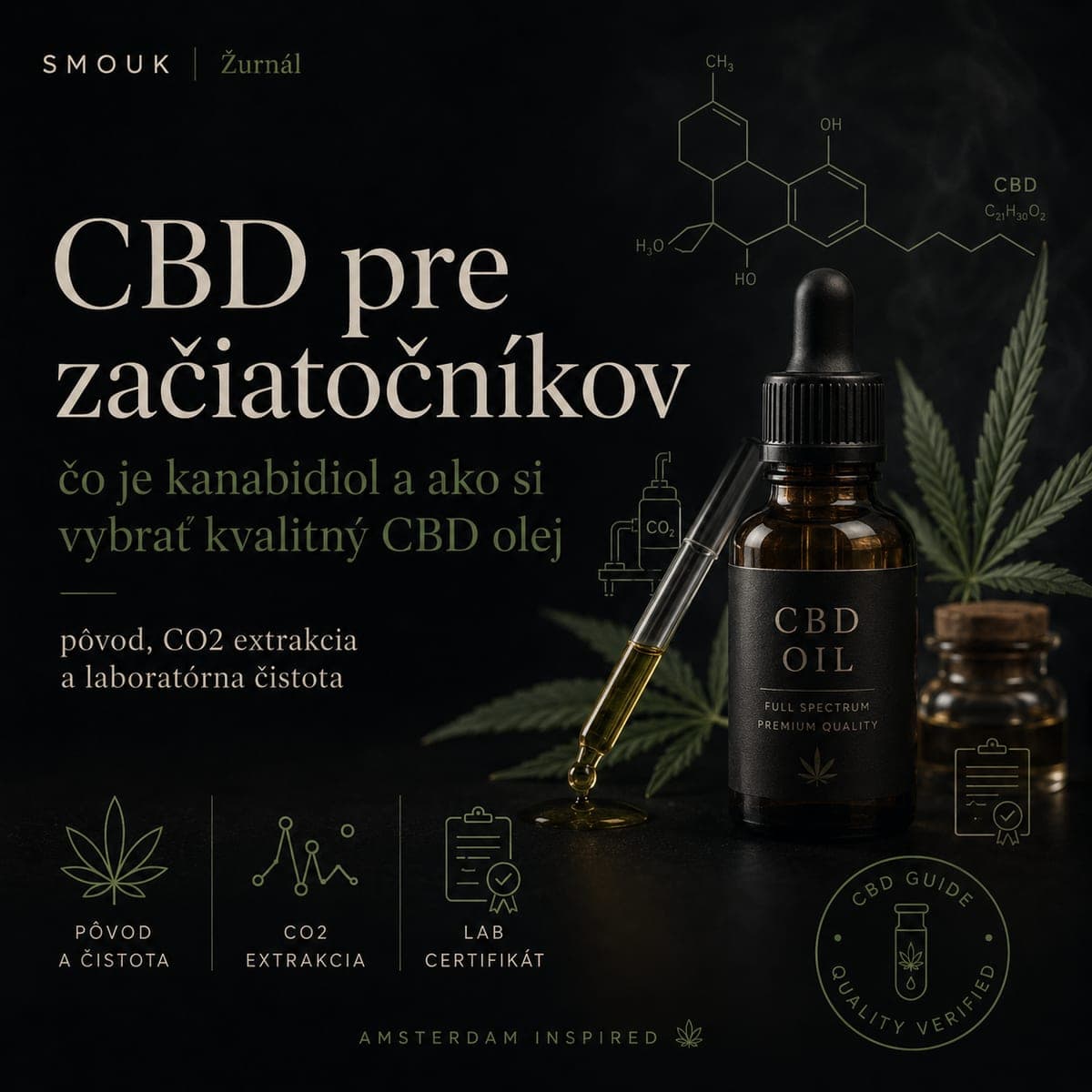
For some, CBD is the latest thing on the counter; for us at SMOUKS it's a return to the roots of a plant that growers have cultivated and understood for centuries. If you've just decided to find your way around the world of cannabidiol for the first time, welcome. This guide isn't about what CBD does. It's about what CBD is, how it's made and, above all, how to tell a genuinely high-quality product from a mediocre substitute. Because with plants, just as with coffee or wine, origin, purity and the producer's honesty are what count.
What is CBD: one molecule, plenty of myths
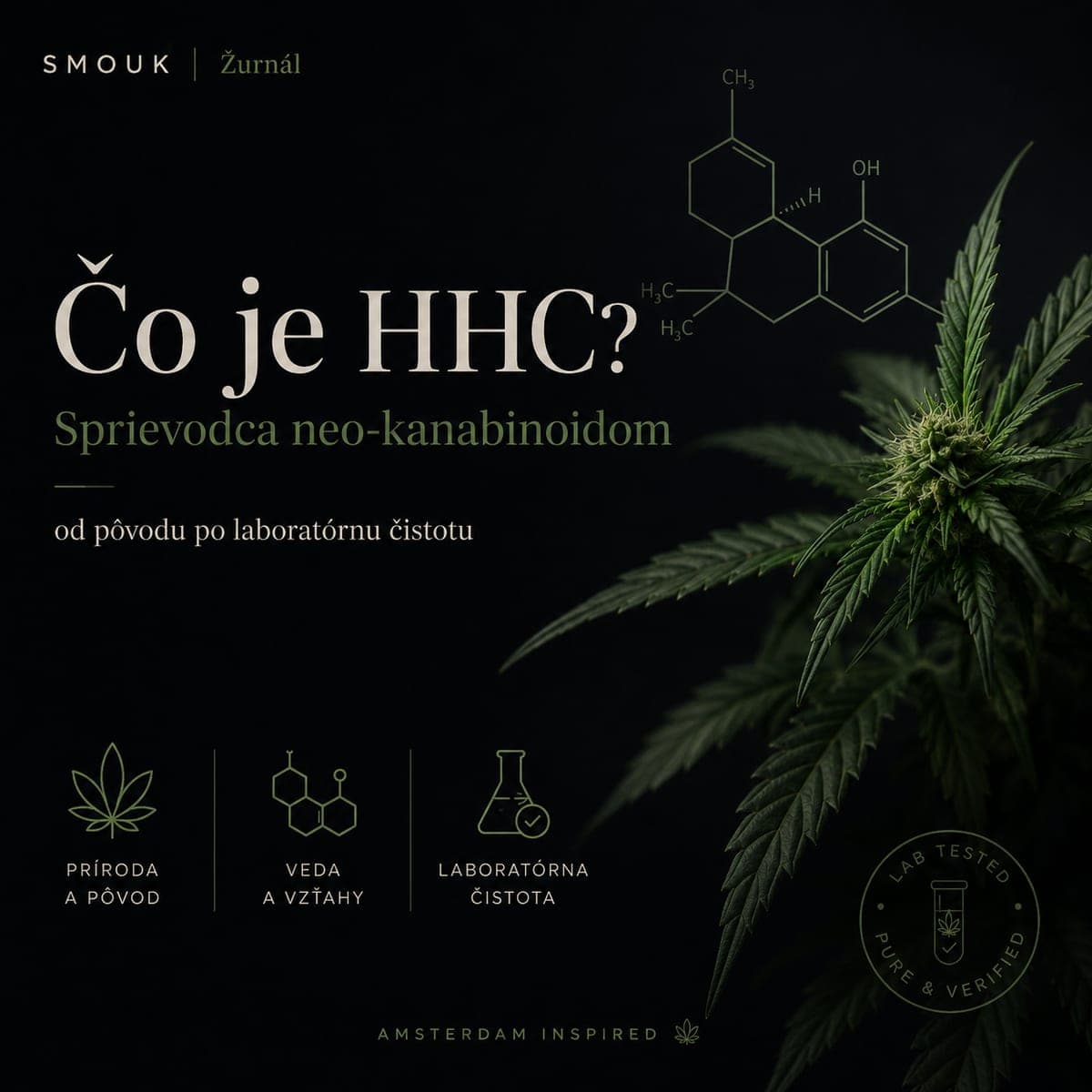
CBD is short for cannabidiol, one of more than a hundred naturally occurring compounds produced by the cannabis plant (Cannabis sativa). We call these compounds cannabinoids. Cannabidiol is among the best known and most studied, and alongside hemp fibre and seeds it is today one of the main reasons hemp is grown legally in Europe too.
It's important to make a distinction: CBD is obtained mainly from industrial hemp, meaning varieties bred to contain only a minimal, legally set amount of THC. That is exactly why hemp products containing CBD can be traded legally within the applicable legislation. This is no legal grey area; it's a traditional agricultural crop with precise rules.
How CBD is made: from field to bottle
Cannabidiol's journey begins in the field. As it grows, the hemp plant forms substances in tiny glands on its flowers which, in raw form, are not yet the CBD we know from products. Only processing, chiefly heating and extraction, turns the molecules into their final, stable form.
Cannabinoids are obtained from the dried flowers by extraction. The cleanest method, and the most prized in the premium segment, is carbon dioxide (CO2) extraction. It works without aggressive solvents, is gentle and preserves the plant's rich palette of natural substances. The resulting extract is then either purified further or blended with a carrier oil, most often hemp oil or MCT oil from coconut, to create the final product.
Quality CBD doesn't begin in the lab, but in the field. Poor raw material can't be rescued by good extraction.
Forms of CBD: oils, flowers and everything in between
What most easily confuses a beginner is the sheer variety on offer. It helps to divide it into the basic categories you'll come across most often:
- CBD oils and tinctures: extract dissolved in a carrier oil, supplied in a glass dropper bottle. The most popular and most straightforward form for a newcomer, because you know exactly what you're buying.
- CBD flowers: dried female flowers of industrial hemp, prized above all for their aroma and craft character. Here the variety, the growing method and the drying are what count.
- Cosmetics and balms: products for external use, where the extract is combined with conditioning ingredients.
- Vaping products and concentrates: for the more experienced, where purity and origin of the raw material again reign supreme.
Spectrum: full-spectrum, broad-spectrum and isolate
The word you'll see on labels over and over is spectrum. It describes how broad a range of natural substances a product contains. In terms of terminology, we distinguish three basic types:
- Full-spectrum: contains the whole natural range of cannabinoids, terpenes and other plant components as they occur in the plant, including the legally limited trace amount of THC.
- Broad-spectrum: a similarly rich blend of plant substances, but with the THC deliberately removed to almost zero.
- Isolate: pure cannabidiol in crystalline form, stripped of all other components. You can recognise it by the fact that it usually has no distinct aroma or flavour.
None of these types is universally better. They are simply different profiles, and different producers choose them according to the character of the product. For a beginner, the most important thing is knowing which type they're holding — and that it is clearly stated on the label.
CBD oil: how to choose a quality product
This is where the wheat is separated from the chaff. Neither the price nor pretty packaging tells you anything about quality. When choosing a CBD oil, go by what can be measured and documented:
- Lab certificate (COA): an independent analysis documenting cannabinoid content and purity. A serious seller will provide it for every batch without hesitation.
- Declared CBD content: a clear figure in milligrams or per cent, not just a marketing slogan on the front.
- Origin of the raw material and extraction method: trustworthy producers state where the hemp comes from and how it was processed. CO2 extraction is the mark of a premium approach.
- Purity and safety: testing for heavy metals, pesticides and residual solvents. Hemp is a plant that absorbs a lot from the soil, which makes this point crucial.
- Brand transparency: ingredients, date, batch and contact details. The more information, the less room for doubt.
One simple rule of thumb to finish: if a seller can't or won't show you a lab report, it's not the product for you. With quality CBD, transparency is a matter of course, not a favour.
At SMOUKS we approach hemp products the way an Amsterdam master approaches his craft, with an emphasis on origin, the Dutch tradition of quality and every batch verified in the lab. We believe an informed customer is the best customer, which is why we'd rather show you the certificate before the price tag. SMOUKS products are intended exclusively for adults over 18 — always buy responsibly.
Caught your interest? Browse our hand-picked range — tested, certified, no exceptions.